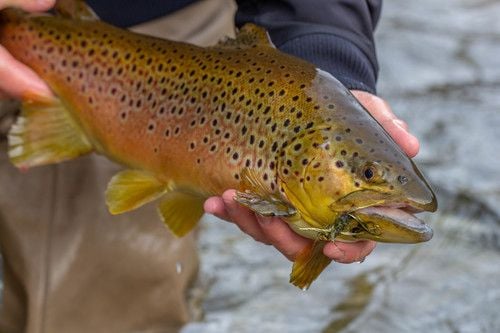
Brown Trout
Salmo trutta
The most iconic freshwater fish in European fly fishing — wary, selective, and endlessly fascinating.
Clean, cold, well-oxygenated rivers and streams; also lakes. Requires water temperatures below 20 °C to thrive.
20–70 cm, typically 0.3–2 kg; large fish in rich rivers can exceed 5 kg.
Salmo trutta
Native to river systems draining into the Atlantic, North Sea, Baltic, and Mediterranean. Found throughout the British Isles, Scandinavia, Central Europe, and as far east as the Caspian basin.
Brown trout is the cornerstone species of European fly fishing. Its wariness, selective feeding behaviour, and spectacular rise to surface flies have inspired generations of anglers. Unlike its Pacific cousins, the brown trout did not need to be introduced to European rivers — it evolved alongside them.
Found in everything from tiny limestone spring creeks to major freestone rivers, brown trout occupy a wide range of habitats but share one requirement: cold, clean water with adequate oxygen.
Fly fishing tactics
Dry Fly Fishing
The classic and most celebrated method. Match the hatch by observing what insects are emerging on the surface. During prolific mayfly hatches, trout can become highly selective. Present the fly drag-free directly in the fish's feeding lane.
Nymphing
For the majority of the season when fish are not rising, sub-surface techniques account for most trout caught. Czech nymphing works well in faster, deeper water.
Recommended flies
Best months
Other species
Arctic Char
Salvelinus alpinusA relic from the last Ice Age — the arctic char inhabits the coldest and deepest lakes of Northern Europe and offers pure wilderness fly fishing.
Asp
Leuciscus aspiusA fast, aggressive surface predator unique to European rivers — asp fly fishing combines the excitement of sight fishing with explosive surface takes.
Atlantic Salmon
Salmo salarThe king of rivers — a powerful anadromous fish that returns from the ocean to spawn in its birth river.
Barbel
Barbus barbusA powerful bottom-feeding river specialist whose strength in fast current makes it one of Europe's most underrated fly-rod fish.
Carp
Cyprinus carpioThe most exacting warm-water sight-fishing challenge in Europe: shallow-water carp reward stealth, accurate casting, and nerve.